
Evaluating Active Transportation Habits on Adolescents and Their Physical Activity Levels

The Physical Environment and Active Transportation (PEAT) Study will evaluate how the new Silver Line Metrorail of the Washington, DC rapid transit system contributes to adolescent active transportation habits and how these transportation habits can potentially affect adolescents’ physical activity levels and overweight/obesity rates.
Department: Kinesiology
Room Number: 0110K
Director: Jennifer D. Roberts
Office Phone Number: (301) 405-7748
Email: jenrob@umd.edu
Active Transportation
Active transportation, such as walking, biking or using public transportation, as a means of transportation, has increasingly been viewed as a strategic and integral pathway to increasing physical activity levels in youth and thus reducing overweight or obesity levels. Adolescents that use active transportation have better cardiorespiratory and muscular fitness, increased energy expenditure, more favorable body composition and less weight gain. Despite these benefits, it is not well understood how environmental and social factors are associated with the adoption of active transportation behavior.
Built and Social Environment
Neighborhood street connectivity, land use, urbanicity, family time constraints, adolescent fear coping, and parental risk perceptions, can influence active transportation patterns. However, the dynamic relationship of these environmental and social factors has not been examined extensively. Most of the youth active transportation research has emphasized walking and cycling. A few studies have examined public transportation and adolescent active transportation and nearly all of those studies have occurred outside of the U.S. The Physical Environment and Active Transportation (PEAT) Study will evaluate how a newly introduced public transportation system extension and the social environment contribute to adolescent active transportation habits and how these transportation habits can potentially affect adolescents’ physical activity levels and obesity rates.
The PEAT Study
The PEAT Study will explore the impact of a Washington, DC Metropolitan Area Transit Authority (Metro) extension (The Dulles Corridor Metrorail Project (Silver Line)) on adolescent active transportation in Fairfax County, Virginia, where more than one quarter of youth are overweight or obese. The Silver Line recently opened on July 26, 2014 with a total of 28 stations, including five new stations in Fairfax County, Virginia. This Metro system extension now provides a new physical environment and an opportunity for adolescents to engage in active transportation to and from Metro stations on their way to school and other destinations.
We are very proud of our collaborations with:
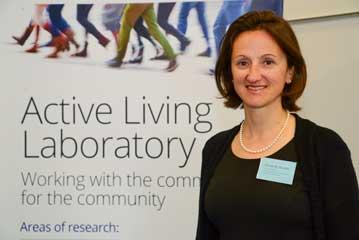
Sandra Mandic, PhD
Investigator
Senior Lecturer
School of Physical Education, Sport and Exercise Sciences
University of Otago
Dunedin, New Zealand
Eileen O. Boone, CPP, CPRP
Director, Leisure and Learning Department
Reston Community Center
2310 Colts Neck Road, Reston, VA 20191
Richard Cabellos
Director
Southgate Community Center
12125 Pinecrest Road, Reston, VA 20191
Anthony Fuller
Program Manager and Treasure Hunter
Reston Teen Center
12196 Sunset Hills Road, Reston, VA 20191

Jennifer D. Roberts, DrPH
Principal Investigator
Assistant Professor
Department of Kinesiology

Shannon L. Jette, PhD
Investigator
Assistant Professor
Department of Kinesiology

Craig S. Fryer, DrPH
Investigator
Assistant Professor
Department of Behavioral and Community Health

Lindsey Winter
Graduate Research Assistant
Graduate Student
Department of Kinesiology

Myles Davenport
Intern
Undergraduate Student
Department of Kinesiology

Amy Wang
Volunteer
Undergraduate Student
Department of Kinesiology

Felix Lee
Volunteer
Undergraduate Student
Department of Kinesiology
"Transportation Equity Issues in the State of Maryland"
Dr. Roberts presented PLOT Study research at the Symposium on Environmental Justice and Health Disparities in Maryland and the Washington D.C. Region held May 12, 2018 in College Park, M.D.
"Between Privilege and Oppression"
PLOT Study research titled "Between Privilege and Oppression: An Intersectional Analysis of Active Transportation Experiences among Washington, D.C. Youth" published in International Journal of Environmental Research and Public Health, April 12, 2019.