

Conduct research to develop innovative public health interventions
Acquire and apply essential research skills to conduct original research on identifying individual and societal determinants of health behaviors and well-being. Students are trained to design, implement and evaluate theoretically-informed behavioral and structural interventions to reduce health risks and improve quality of life.
Perfect for students who are passionate about promoting and protecting the health and well-being of all people and communities through innovative, theory-based research and intervention science, aimed at eliminating racial and social injustices.
Career Paths
- Public Health Analyst
- Senior Study Director
- Behavioral Epidemiologist
- Senior Research Analyst
- Principal Research Scientist
- Postdoctoral Fellow
- Assistant Scientist
- Assistant Professor
- Director of Healthy Equity Research
- Research & Evaluation Specialist
Program Overview
The doctoral program in Behavioral and Community Health develops public health professionals who are highly skilled in theory-based, community-engaged and anti-racist quantitative, qualitative and mixed methods research and can effectively translate research findings to promote and protect well-being.
For more information, see the Behavioral and Community Health Flyer.
- Build emergent themes and sub-themes within qualitative data which require re-reading of text and an iterative process of data aggregation and interpretation;
- Discuss the appropriateness of a variety of statistical techniques to analyze quantitative data;
- Run intermediate-level quantitative statistical techniques using a packaged program;
- Choose major social, behavioral and public health theories to use with the design and evaluation of interventions;
- Apply behavior change theories in the development of research questions and hypotheses, intervention development, evaluation approaches;
- Identify and use mobile/computer apps to gather information or collect data for use in the evaluation of research;
- Manage traditional and new media to communicate health information (e.g., statistics, reports) effectively;
- Build data validation tools to measure behavioral factors that influence community health;
- Write a research proposal for theory-based research;
- Select an appropriate research design;
- Implement all aspects of a secondary data analysis study:
- Conceptualize theoretical framework to be studied;
- Conduct all aspects of single item and multi-item scale variable creation;
- Conduct univariate, bivariate, and multivariate analysis; interpret the results;
- Write a manuscript including introduction, methods, results, conclusions, tables, and figures;
- Develop and communicate a comprehensive evaluation plan for health-related interventions at both the environmental and individual level, including a selection of a sample strategy, evaluation design, and appropriate statistical analyses;
- Apply evidence-based approaches in the development and evaluation of social and behavioral science interventions
Students admitted to the doctoral program in behavioral and community health will complete 83 credit hours of coursework/dissertation research.

Sumayya A. Al-Mansur is a PhD student who is also a Nigerian medical doctor with a strong background in HIV clinical mentorship and developmental health. Passionate about health communication, literacy, and equity, she works to empower communities through innovative educational programs and patient-centred care. Growing up in Nigeria and witnessing healthcare challenges fueled a dedication to behavioural health, focusing on the critical role of behaviour in health outcomes. Committed to fostering a more equitable healthcare system, Dr. Sumayya strives to ensure everyone has the knowledge and tools to make informed health decisions and lead healthy lives. salmansu@umd.edu
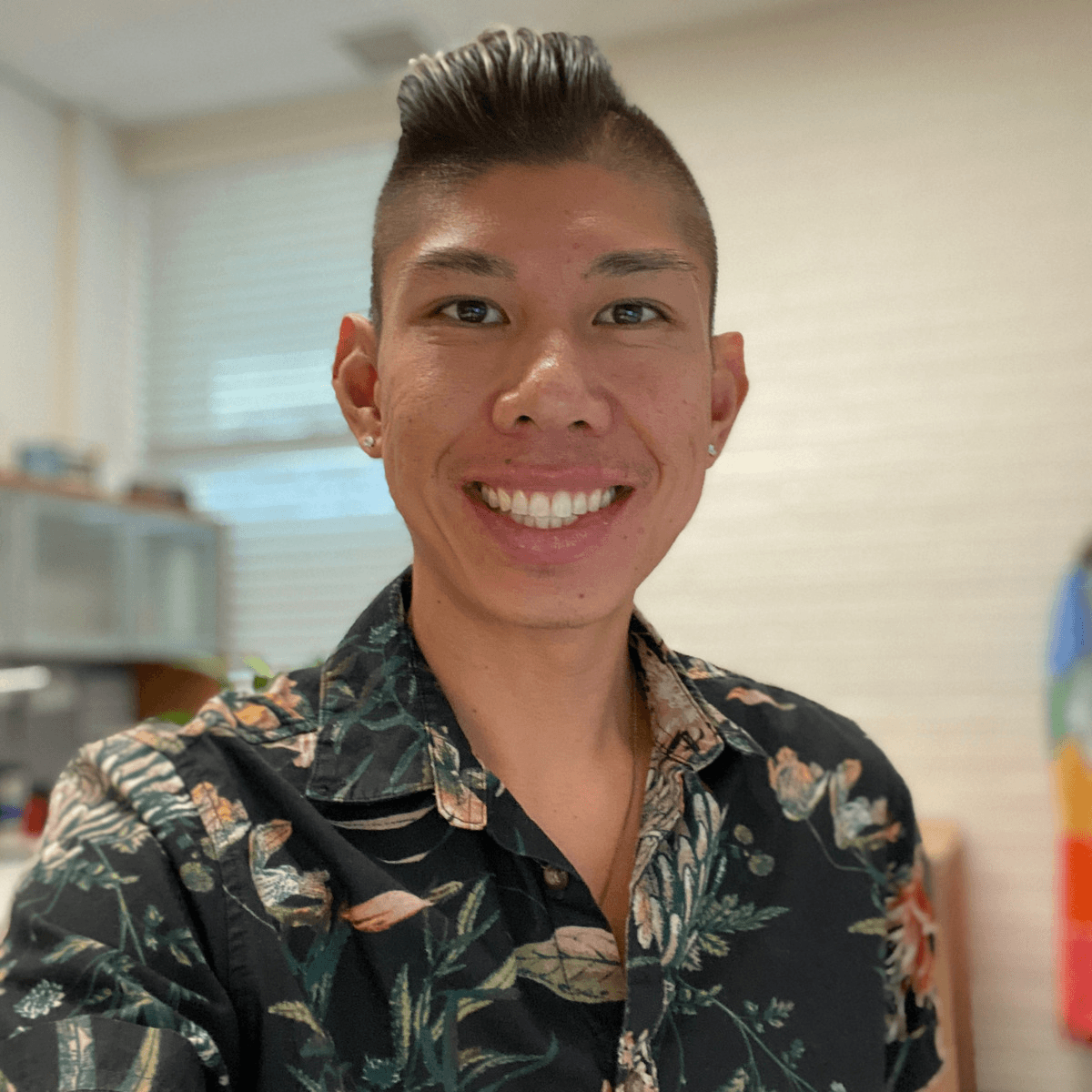
Jordan K. Aquino (he/him) is a PhD student in Behavioral & Community Health and a Graduate Research Assistant at the CDC-funded, Prevention Research Center (PRC). He is also a Lecturer in the Department of Public Health at California State University, Fullerton, where he earned his BS in Health Science (and minor in Chemistry) and MPH in Health Promotion & Disease Prevention. Prior to his doctoral studies at the University of Maryland, he was the Center Director of the Fibromyalgia & Chronic Pain Center and Project Director/Co-Investigator a 10-year longitudinal study investigating the physical and mental statuses of older adults living with and without fibromyalgia training over 200 transdisciplinary undergraduate and graduate students. Mr. Aquino has been a NIMHD-funded Visiting Scholar at Chiang Mai University in Thailand, NCI-funded Visiting Scholar at the UCLA Fielding School of Public Health and Jonsson Comprehensive Cancer Center, and a CSU-funded Sally Casanova Pre-Doctoral Fellow at the Chronic Pain & Fatigue Research Center at the University of Michigan. He is currently working under the mentorship of Dr. Bradley Boekeloo at the UMD-PRC evaluating and disseminating a mental health provider cultural competency training with sexual and gender diverse clients. Using both quantitative and qualitative methods and grounded in intersectionality, minority stress, and social support theories, Mr. Aquino’s research interests span the sexual and mental health of LGBTQ+ people, substance use, and HIV prevention/U=U. jkaquino@umd.edu

Alexis S. Hunter (she/her) is a Teaching Assistant and a PhD student in the Department of Behavioral and Community Health. Alexis earned her BA in Psychology from Michigan State University with specializations in Health Promotion and Bioethics, Humanities, and Society. She completed her MA in Community Psychology and Social Change at the Pennsylvania State University. Prior to joining the University, she worked within an urban-metropolitan university with health and racial disparities in chronic diseases (asthma, diabetes, and HIV/STI). Alexis is passionate about her work within health and racial disparities, substance use, sexuality, and HIV/AIDS prevention and intervention. She has extensive experience as a qualitative researcher, working inside urban and rural communities. She has worked as a Research Project Manager as well as a HIV test counselor and prevention specialist in the Metro Detroit Area. She is interested in finding creative and innovative ways to use community engaged research to structure socio-behavioral and sexual health interventions for adolescent and emerging adults to address the gaps that exist for understanding sexual and gender minority health disparities. huntera5@terpmail.umd.edu
Bola Kushima is a Teaching Assistant and has a long-standing passion for seeing the translation of public health knowledge to global actions that impact the health of populations. Her specific interests are in infectious disease, and maternal and child health. She also thoroughly enjoys administration and business development. She speaks 1 more language aside from English. In her free time, she enjoys traveling, cooking, and learning new things. okushimo@umd.edu

David Liendo (he/him) is a first-year PhD student and Graduate Research Assistant in the Behavioral and Community Health program at the University of Maryland School of Public Health. His research focuses on enhancing health interventions for Latinx communities in response to COVID-19. David also serves as a Data Analyst for the CDC-Esperanza Hope For All Vaccine Program at UnidosUS, managing COVID-19 data and supporting strategic data visualization for CDC-funded affiliates. Previously, he worked at the Fairfax County Department of Health, conducting epidemiological research to address COVID-19 challenges and vaccine inequity among Latinos. David holds a Bachelor of Science with Distinction in Research in Biology and Society from Cornell University and a Master of Public Health in Epidemiology from Brown University. He is dedicated to advancing health equity and improving the well-being of underserved communities. dliendo@umd.edu

Asli McCullers is a 2nd year PhD student in the Behavioral and Community Health Department at the University of Maryland, College Park. She is a Research Assistant supporting the Community Health Awareness, Messages and Prevention (CHAMP) Lab. Asli’s work strives to interrupt the pathway to health inequity by addressing the dynamic array of health challenges faced by adolescents and emerging adults of marginalized backgrounds. Her research has included foci in cancer, cardiovascular disease, reproductive health, digital health and mental health. Additionally, Asli works at MedStar Health Research Institute in the Center for Health Equity Research as a Senior Research Associate. Her work has been published in several peer-reviewed journals, including the American Journal of Public Health. Previously, she received her MPH in Epidemiology from the University of Delaware, her post-baccalaureate from University of Massachusetts Medical School, and her BS in Biology and Music Performance from Towson University. amccull5@umd.edu

Abby Pollock (she/her) is a Graduate Research Assistant and doctoral student in the Department of Behavioral and Community Health. She earned a Master of Health Science from the Department of Mental Health from the Johns Hopkins Bloomberg School of Public Health. Her research focuses on the impact of social determinants on aging trajectories in African American older adults. She is particularly interested in utilizing a life course approach to understand the effect of adverse life experiences on cognitive decline and dementias in racially diverse older adults. She obtained her Bachelor of Arts degree in psychology with a minor in music from the University of Maryland, Baltimore County. In her free time, Abby enjoys spending time outdoors with her dog, Henry. apolloc2@umd.edu

Tiffany Saavedra (she/her) serves as the Director of Global Oncology and Strategic Initiatives for VCU Massey Comprehensive Cancer Center (Massey) and has 15+ years of experience in global public health, research administration, and oncology research and development in community, academic, and industry settings. Before joining Massey, Tiffany was a consultant with the Huron Consulting Group, providing subject matter expertise to emerging and NCI-designated Cancer Centers in various areas, including strategic planning, change management, implementation science, and Cancer Center Support Grant (NCI P30) strategies and applications. As a PhD student within the Behavioral and Community Health Program at the UMD School of Public Health, Tiffany aims to focus on community-engaged research to address systemic or structural inequities in cancer outcomes. She received her undergraduate and graduate degrees from the Johns Hopkins University and the Johns Hopkins Bloomberg School of Public Health, respectively. tsaaved1@umd.edu

Kenan Zamore (he/him) is a PhD student and an Epidemiologist focused on population level health dynamics. My Interests include injury epidemiology, behavioral health/SUDs, health disparities and informatics. I am interested in applying public health surveillance techniques to non-traditional public health problems ( most notably violence prevention and substance misuse disorders )and using surveillance data to inform public policy and intervention efforts, and to attack barriers to the routine exchange of vital data. kzamore@umd.edu