

The Coping and Relationship Strengthening (CARES) Research Lab is affiliated with the Department of Family Science at the University of Maryland and the TOGETHER Program. Our work in the lab focuses on identifying factors that genuinely strengthen relationships while also recognizing relationships as sources of resilience and protection against chronic and external stressors. A core aspect of our research is our commitment to understudied and underserved communities. We take a culturally responsive approach, considering structural inequities and community-specific dynamics to understand what works best for each population.
Department: Family Science
Director: Mariana Falconier, PhD
Email: marianak@umd.edu
Phone: (301) 405-4004
Room: SPH | Room 1142
LinkedIn: CARES Lab Page
TOGETHER Project
 This project evaluates the effectiveness of the TOGETHER program, an evidence-based relationship and financial education program developed by Dr. Mariana Falconier and Dr. Jihnhee Kim to improve couples’ communication, reduce financial stress, and enhance relationship functioning and financial management.
Funding: Healthy Marriage and Responsible Fatherhood (HMRF) Grant by the Administration for Children and Families (ACF)
Publications:
- Falconier, M. K., Foss, R., Lachowicz, M. J., & Kim, J. (2023). Evaluation of the 14‐h together relationship and financial education program for couples. Personal Relationships, 30(2), 660-680. https://doi.org/10.1111/pere.12466
- Falconier, M. K., Kim, J., & Lachowicz, M. J. (2023). Together–A couples’ program integrating relationship and financial education: A randomized controlled trial. Journal of Social and Personal Relationships, 40(1), 333-359. https://doi.org/10.1177/02654075221118816
- Falconier M.K. (2015). Together – A couples’ program to improve communication, coping, and financial management skills: Development and initial pilot-testing. Journal of Marital and Family Therapy, 41(2), 236–250. https://doi.org/10.1111/jmft.12052
TOGETHER Online Adaptation
This project examines the effectiveness of adapting the TOGETHER program to an online delivery format. The adaptation aims to enhance accessibility, particularly for couples in rural or underserved areas, and to overcome common participation barriers. By maintaining the program’s evidence-based core components, the online format seeks to deliver the same positive outcomes in psychological well-being, relationship functioning, and financial management as the in-person version.
Funding: Healthy Marriage and Responsible Fatherhood (HMRF) Grant by the Administration for Children and Families (ACF)
Publications:
- Azizi, Z., Falconier, M. K., & Lachowicz, M. J. (2025). Evaluation of the online TOGETHER relationship and financial education program for couples. Family Relations, 74(5), 2761-2780. https://doi.org/10.1111/fare.70044
JUNTOS en PAREJA
 This project evaluates the effectiveness of Juntos en Pareja, a culturally and linguistically tailored adaptation of the TOGETHER program designed specifically for Latine couples. The program addresses the unique financial needs and challenges faced by Latine immigrants, incorporating topics such as managing multigenerational households, sending remittances to countries of origin, and navigating other financial aspects specific to Latine households. By integrating these culturally relevant topics into the curriculum, Juntos en Pareja aims to enhance financial well-being, improve relationship dynamics, and promote long-term resilience among Latine couples.
Funding: Healthy Marriage and Responsible Fatherhood (HMRF) Grant by the Administration for Children and Families (ACF)
Publications:
- Falconier, M. K., Williamson, H., *Azizi, Z., & Yumiseva-L, M. (2026). Evaluation of the individual, relationship, and financial benefits of the Juntos en Pareja for Spanish-speaking Latine couples. Family Process, 65(2), e70153. httsps://doi.org/10.1111/famp.70153
- Yumiseva, M., Falconier, M., & Azizi, Z. (2025). Pilot test of JUNTOS EN PAREJA: Enhancing relationship and financial well‐being in Latine couples. Journal of Marital and Family Therapy, 51(1), e12752. https://doi.org/10.1111/jmft.12752
TOGETHER LGBTQ+ Adaptation
 This project evaluates the implementation and effectiveness of TOGETHER LGBTQ+ Adaptation, a culturally tailored adaptation of the TOGETHER Program for LGBTQ+ couples. The adaptation maintains TOGETHER’s evidence-based core components while centering the experiences and needs of LGBTQ+ people. The adaptation incorporates specific stress and financial stress concerns like coping with minority stress and discrimination, connecting with community and chosen family, financing gender affirming care and LGBTQ+ family planning, and improving communication skills and co-regulation with the aim of supporting LGBTQ+ couples’ long-term health and success.
Funding: Healthy Marriage and Responsible Fatherhood (HMRF) Grant by the Administration for Children and Families (ACF; 2020-2025) AND Preserve, Pivot, & Grow Program Track B by the University of Maryland, College Park
Publications:
*Murry, S. D., Fish, J., *Azizi, Z., *Young, L., & Falconier, M. K. (in press). Pilot test of the relationship and financial education of TOGETHER program for LGBTQ+ people in relationships. Journal of Marital and Family Therapy.
Emotional Map of the Home
 Using semi-structured individual interviews, the Emotional Map of the Home project seeks to understand how heterosexual African American couples construct a sense of security in their homes and what emotional and environmental strategies they use to cope with stress.
Funding: University of Maryland, College Park
Healthy finances for women transitioning to parenthood
2025-2027: Gesunde Finanzen für Frauen im Übergang zur Elternschaft [Healthy finances for women transitioning to parenthood], Federal Ministry of Education and Research, Germany. PI: Dr. Gertraud Stadler.
Dr. Falconier's Role: External consultant.
Funding: 628,266.87 € (=US$ 681,920)
We-INtervention Among Chinese HIV serodiscordant Male Couples
 This study will evaluate the effectiveness of We-INtervention on the perceived stigma and HIV-related outcomes of Chinese HIV-serodiscordant couples through a randomized controlled trial.
PI: Dr. Nancy Yu; Co-Is: Dr. Lynae Darbes and Dr. Mariana Falconier.
Funding: General Research Fund, Research Grants Council, Hong Kong. HKD 699,900 [=US $ 89,937].
Dyadic Coping in couples facing chronic illness
This project involves examining dyadic coping and outcomes in couples facing chronic illness through systematic reviews and meta-analyses. PI: Nancy X. Yu; Co-I: Mariana Falconier and W.W.S. Tam.
Funding: Hong Kong Research Grants Council (HKD) 412,524 [= US $52,668].
Financial Stress in Couples with Cancer
 This overarching project examines how cancer-related financial strain affects the mental, physical, and relational outcomes of couples facing cancer. The project is divided into two distinct tracks. The first track, which forms the core of a dissertation, utilizes cross-sectional primary data to examine how patients' and partners' health is affected by cancer-related financial strain, the mechanisms driving these outcomes, and whether dyadic coping with financial strain helps buffer those effects. The second track employs a qualitative method, using semi-structured dyadic interviews to explore the lived experiences of couples dealing with cancer-related financial challenges and how dyadic coping processes unfold in this context. Furthermore, this qualitative study will examine couples' needs and desires regarding potential interventions to address their financial challenges.
PI: Zeinab (Sarah) Azizi
Advisor: Dr. Mariana Falconier
 Mariana K. Falconier (she/her)
Professor, Family Science
Director, Couple and Family Therapy Master's Program
Dr. Mariana Falconier is Director of the Couple and Family Therapy Master’s program at the University of Maryland. She completed her master’s degree in Marriage and Family Therapy and her doctoral degree in Family Studies at the University of Maryland. Previously, Dr. Falconier was an associate professor at the Virginia Tech MFT master’s program. She is a licensed marriage and family therapist in Maryland and Virginia and AAMFT approved supervisor. She has been seeing individuals, couples, and families since 1992, especially immigrant and Latine communities, and Her research focuses on how couples cope with chronic stress, particularly economic, immigration, medical, and minority stress in low-income, Black, Latine, and LGBTQ+ relationships. She developed TOGETHER, a couples’ program integrating relationship and financial education, and federally funded for over $11 million, and culturally adapted for Latine immigrant couples and for LGBTQ+ relationships. She has taught several courses in the department, including FMSC 745 Gender and Ethnicity Issues in Family Service Delivery, FMSC 641 Couple Therapy, and FMSC 658 Supervised Clinical Practice of Marriage and Family Therapy.
Lab Coordinator
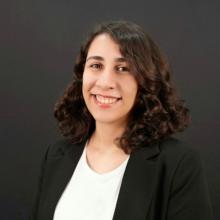
Zeinab (Sarah) Azizi (she/her)
Sarah (Zeinab) Azizi is a doctoral candidate in Family Science at the University of Maryland’s School of Public Health. Her research focuses on the effects of stress on couple relationships, particularly among couples managing chronic diseases. She is also deeply interested in developing and evaluating relationship education interventions tailored to couples facing chronic health challenges. Sarah works as a research assistant with Dr. Mariana Falconier in the TOGETHER program, where she oversees data collection, manages data, and evaluates the program’s effectiveness. Her previous work includes adapting and pilot-testing a psychoeducational program for Iranian couples coping with cardiovascular disease. Sarah holds a bachelor’s degree in Counseling and a master’s degree in Family Counseling from the University of Tehran. Her strong academic foundation, combined with clinical training in Emotionally Focused Therapy, informs her research and practice, emphasizing the importance of emotional connection in promoting health and well-being in couples. Contact: znbazizi@umd.edu
Graduate Students
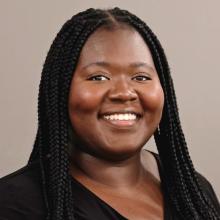
Chidinma (Chichi) Nwankwo (she/her)
Chichi is a doctoral student in Family Science at the University of Maryland, College Park. Her research explores how social and structural factors influence the health and well-being of racial and ethnic minority families, with a particular focus on the resilience of Black immigrant families. Chichi began her career as an early childhood educator for children ages 0–5, then pursued graduate studies in Maternal and Child Health. Her work since then has helped her understand the many factors that shape family health and well-being. Chichi also works part-time as an Advisory Services Analyst for Mathematica, where she provides programmatic support to several human service agencies. Chichi holds a B.S. in Psychology from Carnegie Mellon University and an M.P.H in Maternal and Child Health from George Washington University. Outside of work, Chichi enjoys going on long walks, exploring new restaurants and coffee shops, and spending time with friends and family.

Valeria Funes (she/her)
Valeria Funes is a PhD student in Family Science at the University of Maryland and serves as the Project Coordinator for the TOGETHER program. She earned her Master of Public Health in Global Epidemiology from Emory University's Rollins School of Public Health, where she also completed a certificate in Maternal and Child Health. Valeria's research focuses on reproductive health, with a particular interest in understanding how social determinants of health shape reproductive health outcomes, access to care, and health equity. She is passionate about conducting community-engaged research that informs policies and interventions aimed at improving reproductive justice and reducing health disparities. Contact: vfunes1@umd.edu
Undergraduate Research Assistants
 Camellia Kia (she/her)
Camellia Kia graduated from the Psychology program at the University of Maryland, College Park, in May 2024. She joined the Coping and Relationship Strengthening (CARES) Lab to contribute to research and deepen her understanding of research methods. She is passionate about developing research that enhances couple and family well-being and supports community-centered interventions. She is eager to expand her skills in survey distribution, participant engagement, data collection, and data analysis. Camellia is currently applying to graduate programs in Social Psychology to advance her research on stress, coping, judgment, decision-making, and related psychological processes across diverse populations. In her free time, she usually works out, reads, and bakes sourdough bread.
 Kayla Fu (she/her)
Kayla Fu is a student at the University of Maryland, College Park, pursuing a Bachelor of Science in Public Health Science in preparation to attend medical school. She has a strong passion for women's health and equitable access to care, and hopes to pursue a career in obstetrics and gynecology. As a research assistant with the Cares Lab, she supports data analysis for the TOGETHER program and other related projects. In her free time, Kayla enjoys baking, ballet dancing, volunteering, and spending time with her loved ones.

Maria Pascual (she/her)
Maria Pascual is a junior at the University of Maryland’s School of Public Health, majoring in Family Science with a minor in Human Development. Her academic interests center on parenting styles, child advocacy, the impact of social media on youth and families, and strengthening healthy family dynamics. At the CARES Research Lab, Maria supports outreach and communications by developing media content and research materials that connect the lab’s work to the broader community. Outside the lab, she serves as a Nutrition and Health Instructor with Kids Kitchen Inc., a nonprofit devoted to nutrition education, activities, and resources to prevent obesity and promote healthy eating and exercise behaviors for children and their families in the DMV. Additionally, she works as a behavior technician at Within Me Therapy, providing Applied Behavior Analysis (ABA) therapy to children with autism. She also serves as Mental Health Subcommittee Chair for the Student Health Advisory Committee (SHAC), where she promotes mental health awareness and campus resources. Maria aspires to become a culturally responsive child and family therapist, with a particular focus on supporting Filipino immigrant families, addressing generational trauma, and destigmatizing mental health.

Stina Chen (she/her)
Stina Chen is an undergraduate student in the Public Health Science program at the University of Maryland, College Park. She is excited to learn about community engagement and its effects on underserved communities. She is also interested in learning more about the factors that contribute to strengthening these relationships within these communities. As an intern, she hopes to gain hands-on experience with new research techniques in the lab. Outside of school, she enjoys dancing, spending time with friends and family, and exploring new restaurants.

Sharick Velasquez Garcia (she/her)
Sharick Velasquez Garcia is an undergraduate student at the University of Maryland, College Park, pursuing a dual degree in Psychology and Family Science. She is joining the CARES Lab as a research assistant and is interested in culturally responsive interventions that support Latino and underserved families. Her research interests include child and adolescent mental health, resilience, and family-based protective factors in underserved populations. Through her experience in mentoring and community engagement, she is passionate about promoting equity-driven research that strengthens families and improves mental health outcomes.
CARES Lab Affiliates
Rabiatu Barrie, PhD, Assistant Professor, Department of Family Science, University of Maryland College Park
Norman Epstein, PhD, Emeritus Professor, Department of Family Science, University of Maryland College Park (We honor the legacy of Dr. Epstein, whose leadership, mentorship, and commitment to this field continue to shape the spirit and work of this lab.)
Jessica Fish, PhD, Professor, Human Development and Family Studies, University of Illinois Urbana-Champaign
Jinhee Kim, PhD, Associate Dean, Extension, University of Maryland College Park
Alexandra Wojda-Burlij, PhD, Postdoctoral Research Fellow in Mental Illness Research & Treatment
Martha Yumiseva, PhD, Adjunct Professor, University of Maryland College Park
International CARES Lab Affiliates
Tamas Martos, PhD, Professor and Chair, Institute of Psychology, University of Szeged, Hungary.
Dr. Diana Rivera, Faculty, School of Psychology, Pontificia Universidad Católica de Chile, Santiago de Chile, Chile
Viola Sallay, PhD, Professor, Sigmund Freud Private University, Paris, France, and Associate Professor, Institute of Psychology, University of Szeged, Hungary.
Dr. Gertrud Stadler, Professor, Institute Gender in Medicine Director, Charité - Universitätsmedizin Berlin, Germany
Nancy Yu, PhD, Associate Professor, Department of Social and Behavioural Sciences, City University of Hong Kong, Hong Kong.
* Graduate Student
- *Murry, S. D., Fish, J., *Azizi, Z., *Young, L., & Falconier, M. K. (in press). Pilot test of the relationship and financial education of TOGETHER program for LGBTQ+ people in relationships. Journal of Marital and Family Therapy.
- Falconier, M. K., Williamson, H., *Azizi, Z., & Yumiseva-L, M. (2026). Evaluation of the individual, relationship, and financial benefits of the Juntos en Pareja for Spanish-speaking Latine couples. Family Process, 65(2), e70153. httsps://doi.org/10.1111/famp.70153
- *Azizi, Z., Falconier, M. K., & Lachowicz, M. J. (2025). Evaluation of the online TOGETHER relationship and financial education program for couples. Family Relations.
- *Berman, Z. L., Mittal, M., Falconier, M. K., & Fish, J. N. (2025). Are we ready to serve? Couple and family therapists’ attitudes toward BDSM and their perceived competence to help BDSM practitioners. Sexual and Relationship Therapy, 1-23. https://doi.org/10.1080/14681994.2025.2507105
- Hou, J., Falconier, M. K., Tam, W., Cheung, M. W. L., Fu, R., Bu, H., & Yu, N. X. (2025). Dyadic coping and relationship satisfaction among couples with a chronic illness: A meta-analytical actor–partner interdependence model. Clinical Psychology Review, 102587. https://doi.org/10.1016/j.cpr.2025.102587
- *Yumiseva, M., Falconier, M., & *Azizi, Z. (2025). Pilot test of JUNTOS EN PAREJA: Enhancing relationship and financial well‐being in Latine couples. Journal of Marital and Family Therapy, 51(1), e12752. https://doi.org/10.1111/jmft.12752
- Falconier, M. K., Wojda-Burlij, A. K., & Conway, C. A. (2024). Dyadic coping moderates the association between economic strain and psychological distress in low-income couples. International Journal of Stress Management. https://doi.org/10.1037/str0000338
- Conway, C. A., Falconier, M. K., & Kim, J. (2024). The relationships among parents’ anxious and avoidant attachment, emotion dysregulation, and parenting. Contemporary Family Therapy, 46(3), 294-311. https://doi.org/10.1007/s10591-023-09681-w
- Falconier, M. K., *Foss, R., Lachowicz, M. J., & Kim, J. (2023). Evaluation of the 14‐h together relationship and financial education program for couples. Personal Relationships, 30(2), 660-680. https://doi.org/10.1111/pere.12466
- Kim, J., Falconier, M. K., & Conway, C. A. (2023). Relationships among emotion regulation, financial self-efficacy, and financial management behaviors of couples. Journal of Family and Economic Issues, 44(2), 342-355. https://doi.org/10.1007/s10834-022-09827-2
- Falconier, M. K., Wojda‐Burlij, A. K., Conway, C. A., & Kim, J. (2023). The role of emotion regulation in couples’ stress communication and dyadic coping responses. Stress and Health, 39(2), 309-322. https://doi.org/10.1002/smi.3186
- Randall, A. K., Donato, S., Neff, L. A., Totenhagen, C. J., Bodenmann, G., & Falconier, M. (2023). A scoping review on couples’ stress and coping literature: Recognizing the need for inclusivity. Journal of Social and Personal Relationships, 40(3), 812-855. https://doi.org/10.1177/02654075221101904
- Falconier, M. K., Kim, J., & Lachowicz, M. J. (2023). Together–A couples’ program integrating relationship and financial education: A randomized controlled trial. Journal of Social and Personal Relationships, 40(1), 333-359. https://doi.org/10.1177/02654075221118816
- Falconier, M. K., & Jackson, J. B. (2020). Economic strain and couple relationship functioning: A meta-analysis. International Journal of Stress Management, 27(4), 311.
- Falconier, M. K., Rusu, P. P., & Bodenmann, G. (2019). Initial validation of the dyadic coping inventory for financial stress. Stress and Health, 35(4), 367-381. https://doi.org/10.1002/smi.2862
- Bodenmann, G., Falconier, M. K., & Randall, A. K. (2019). Dyadic coping. Frontiers in Psychology, 10, 1498. https://doi.org/10.3389/fpsyg.2019.01498
- Escobar, J., Falconier, M., & Muruthi, B. (2019). ‘Se llevaron el padre de mis hijos’: Latina mothers coping with the deportation of their partner. Journal of family therapy, 41(2), 277-301. https://doi.org/10.1111/1467-6427.12227
- Falconier, M. K., & Kuhn, R. (2019). Dyadic coping in couples: A conceptual integration and a review of the empirical literature. Frontiers in Psychology, 10, 571. https://doi.org/10.3389/fpsyg.2019.00571
Books and Book Chapters
- Epstein, N. B., & Falconier, M. K. (2024). Treatment Plans and Interventions in Couple Therapy. Guilford Publications.
- Falconier, M. K., & Epstein, N. B. (2019). Contingency Contracting in Couple and Family Therapy. In Encyclopedia of Couple and Family Therapy (pp. 583-585). Cham: Springer International Publishing.
- Epstein, N. B., & Falconier, M. K. (2018). Communication training in couple and family therapy. In Encyclopedia of Couple and Family Therapy (pp. 1-3). Springer, Cham.
- Epstein, N. B., & Falconier, M. K. (2017). Shame in couple relationships. In Foundations for Couples' Therapy (pp. 374-383). Routledge.
- Bodenmann, G., Randall, A. K., & Falconier, M. K. (2016). Coping in couples: the systemic transactional model (STM). In Couples coping with stress (pp. 5-22). Routledge.
- Falconier, M. K., Randall, A. K., & Bodenmann, G. (Eds.). (2016). Couples coping with stress: A cross-cultural perspective. Routledge.
- Falconier, M. K. (2016). Dyadic Coping in Latino Couples in the US. In Couples Coping with Stress (pp. 70-85). Routledge.
- Falconier, M. K., Randall, A. K., & Bodenmann, G. (2016). Cultural considerations in understanding dyadic coping across cultures. In Couples Coping with Stress (pp. 23-35). Routledge.
- Epstein, N. B., & Falconier, M. K. (2014). Cognitive-behavioral therapies for couples and families. In An introduction to marriage and family therapy (pp. 259-318). Routledge.
Graduate and undergraduate students interested in exploring stress and coping in relationships are encouraged to join the CARES lab. We offer both volunteer and credit-based research assistantship opportunities. To express your interest in joining, please complete this form.
Prospective graduate students interested in collaborating with CARES Lab are encouraged to reach out at marianak@umd.edu.
Our lab has collected data using a variety of measures aligned with our research focus. You can find more information about our available datasets and measures here. We welcome opportunities for research collaboration. If you are interested in working with us or learning more about the available data, please reach out to Dr. Falconier or the lab coordinator.
Finance and Relationship Education Workshop
Our workshops are now open for registration.

Financial Challenges of Couples with Cancer
We are currently seeking couples coping with cancer to participate in our research. Please see the flyer below for more information, and contact us at znbazizi@umd.edu with any questions.
